

In today’s world, safety is more than a “nice to have”—it’s a top priority for every building, workplace, or environment. Facility and building managers must be ready for any unforeseen events. From power outages and severe weather to unexpected crises, emergencies present challenges that everyone must anticipated—and managers who aren’t prioritizing safety and proactively managing risk are already behind.
One way to address this is through the use of photoluminescent exit signage. Combined with an effective emergency plan, photoluminescent signs are a critical, and often overlooked, part of building security and safety. This additional emergency evacuation signage and exit strategy clearly guides occupants along egress pathways when it matters most, helping reduce confusion and ensure faster, safer evacuations.
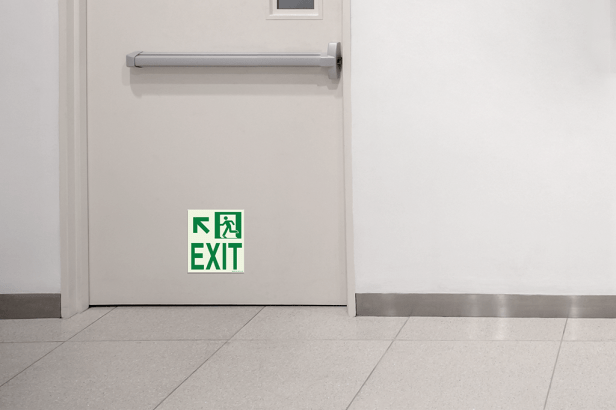
Photoluminescent Emergency Exit Sign w/Arrow (Left) mounted low on door indicating direction of egress.
What Is Photoluminescent Exit Signage?
Photoluminescent signage works by absorbing ambient light and quite literally glowing in the dark—transforming it into dependable safety guidance and providing continuous visibility without electricity or batteries. Even during a sudden power outage or low-visibility situation, photoluminescent exit signs and stairway identification signs continue to guide occupants safely along exit stairs and the egress path.
This signage is crucial because it offers non-electric guidance when it’s needed most, remaining visible and effective even when building lights fail and providing clear direction and peace of mind in critical moments.
Why Photoluminescent Exit Signs Matter
Photoluminescent safety signs and low-level exit signs provide clear direction during high-stakes situations, especially in stairwells. In an emergency, every second counts. Having reliable signage demonstrates that your facility takes safety seriously. For high-rises, commercial buildings, and facilities of any size, this signage isn’t just smart—it’s a forward-thinking safety measure that protects lives and reputations.
Applications and Benefits: How Photoluminescent Signage Can Make Your Building a Safety Beacon
Photoluminescent signage creates a continuous safety network across your facility, reducing confusion, supporting faster evacuations, and helping meet building codes. Exit signs and stairway markings make stairwells and exits instantly recognizable, even in low-visibility situations, so occupants can find their way quickly. Low-level exit signs, handrail markings, and stairway identification signage guide employees, visitors, and staff safely along stairwells, including during smoke or power failures. “Not an exit” signs eliminate confusion and keep traffic flowing along proper egress pathways.
In addition to guiding occupants, photoluminescent signage helps facilities meet egress route and exit stairway code requirements, improving visibility and supporting safer evacuations during power outages or low-visibility conditions. By implementing this system, facility managers demonstrate proactive safety, minimizing panic, protecting lives, and showing a commitment to occupant safety. Integrating photoluminescent signage into your emergency plans for buildings transforms stairwells, corridors, and exits into a clear, reliable egress system—because in a crisis, every second counts.
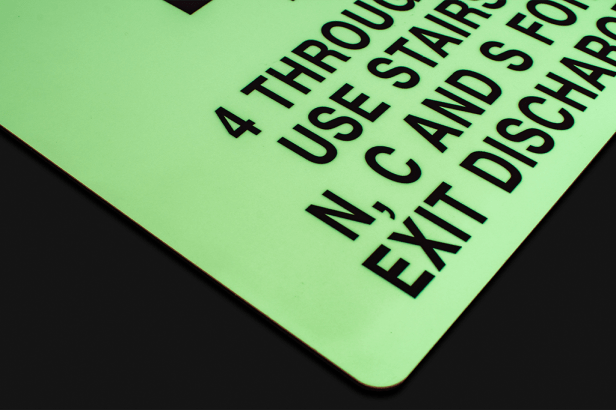
Photoluminescent sign glowing in low light displaying emergency exit instructions.
Installation, Material, and Performance Considerations
For photoluminescent exit signage to be effective, it needs to be installed strategically and perform reliably when it matters most. Signs should be placed at every stair landing, along handrails and stair edges, near door frames, at changes in direction along the egress route, next to evacuation map holders, and at final exit discharge points. This creates a continuous, clearly marked egress pathway that helps occupants navigate safely.
Certified photoluminescent signage isn’t just any glow-in-the-dark exit sign. Most buildings use green photoluminescent exit signs because the color is highly visible and signals safety, though some local codes allow red, so always double-check the rules in your area. The most important part? These signs need to be made with approved photoluminescent materials that meet recognized standards for brightness, duration, and legibility. That means they’ll perform reliably when you need them most.
On top of that, photoluminescent signage is durable and requires very little maintenance, making it a smart, cost-effective investment in safety. By combining proper placement with high-quality photoluminescent materials, facility managers can make sure their exit signage provides clear guidance, keeps occupants safe, and stays fully compliant with modern building codes.
Photoluminescent Exit Sign Requirements
Installing photoluminescent exit signage isn’t just smart—it’s often required by many building codes to keep occupants safe and ensure compliance. Different jurisdictions adopt variations of these standards, so understanding the key requirements (and checking local codes) is important.
National and Model Code Requirements:
- International Building Code (IBC) – Buildings over three stories generally require luminous egress path markings in stairwells and along exit routes. This ensures occupants can safely evacuate during power loss or low-visibility conditions using approved photoluminescent signage.
- NFPA 101 Life Safety Code – Provides baseline standards for emergency exit sign placement, materials, and performance, ensuring photoluminescent signs used in egress paths meet recognized performance criteria for brightness, duration, and legibility.

Photoluminescent Room No. – Single Level Unit – NYC sign mounted low on wall identifying room location.
State and Local Requirements:
- California Exit Sign Requirements – Under the California Building Code (Title 24), photoluminescent exit and low-level directional signage is required in stairways connecting more than three stories. Signs must use approved photoluminescent materials and meet specific visibility and stairway identification requirements to guide occupants, including below smoke levels.
- New York City Exit Sign Requirements – The New York Building Code mandates photoluminescent exit path markings in high-rises, including stairs, handrails, and obstacles, so occupants can discern egress paths during power failures or emergencies.
Because codes vary by location and building type, it’s important to verify local sign requirements so that every photoluminescent exit sign and stairway sign meets legal standards while providing dependable guidance during critical moments.
If you’re unsure about specific state or local requirements, we can help—we research all applicable codes for your facility to make sure your building stays compliant. Compliance becomes more than a checklist—it’s a proactive way to protect lives and demonstrate your facility’s commitment to safety.

Photoluminescent Emergency Exit Directional Sign (Left) mounted low on wall directing occupants to stairwell exit.
Make Photoluminescent Exit Signage a Priority
A comprehensive photoluminescent exit signage system—including low-level exit signs, stairway identification signs, and emergency exit signs—protects occupants and keeps your building code-compliant.
Don’t wait until an emergency exposes gaps in your safety plan. Contact our team today to review your photoluminescent exit signage and egress route markings. We’ll help you ensure your building not only meets all code requirements but also provides clear, reliable guidance when it matters most.
 EvacuationPlans.com